

Call: +34 876 555 429
Email: srenda@unizar.es
Address: Office 3.1.11 c/Mariano Esquillor SN Edificio I+D+i, I3A, 50018, Zaragoza (Spain)
Sideral: See the profile (CV)
ABOUT ME
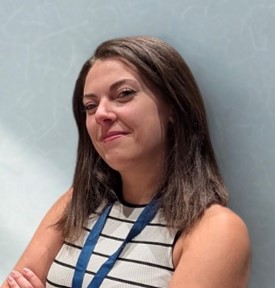
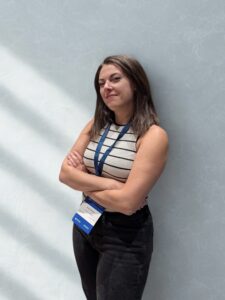
Simona Renda is a Juan de la Cierva postdoctoral researcher, member of the consolidated Catalysis and Reactor Engineering Group (CREG) of the University of Zaragoza since 2023 and of the Aragón Institute for Engineering Research (I3A) since 2025. She holds a BSc and MSc in Chemical Engineering and a PhD in Industrial Engineering – Chemical Engineering Program from the University of Salerno (Italy), awarded with honours.
Her research focuses on catalysis and reactor engineering for environmental applications. She has a consolidated background on the topics of structured catalysts, carbon capture and utilization, and industrial processes such as CO2 hydrogenation, Claus gas treatment, water desalination and propane dehydrogenation. She has experience with both experimental work and CFD modelling, and her projects combine academic research with industrial collaborations. She participated in more than 10 research and technological transfer projects, including two European H2020 projects. As a member of CREG, her current research lines include:
-
- CO2 hydrogenation to e-fuels (dimethyl ether and methanol)
- Innovative fluidized bed reactors with continuous sorbent flux for the process intensification of sorption-enhanced reactions
Her research involves collaborations with over 10 industrial/foreign partners, and she has participated with scientific contributions in over 15 international conferences. She is an active reviewer for several scientific journals and serves on the early career board of Catalysts. She is involved in mentoring and teaching: she has supervised 6 bachelor’s and 9 master’s students, coordinated 5 international internships, and currently directs a PhD thesis on CO₂ utilization. She has participated in didactive activities with courses in the field of catalysis and chemical reaction engineering at the University of Salerno and the University of Zaragoza.
Simona has published more than 30 scientific papers in SCI-indexed journal with more than 800 citations, and has an h-index of 13 (data according to Scopus @December 2025).
Orcid: https://orcid.org/0000-0002-5926-5252
Scopus: https://www.scopus.com/authid/detail.uri?authorId=57212381756
PUBLICATIONS
2026
González Pizarro, Rodrigo; Renda, Simona; Lasobras Laguna, Javier; Soler Herrero, Jaime; Menéndez Sastre, Miguel; Herguido Huerta, Javier
Intensified Catalytic CO₂ Conversion into e-Fuels: A Study of Different Process Intensification Strategies Actas de congresos
vol. 14, 2026.
@proceedings{GonzálezPizarro_Renda_LasobrasLaguna_SolerHerrero_MenéndezSastre_HerguidoHuerta_2026,

title = {Intensified Catalytic CO₂ Conversion into e-Fuels: A Study of Different Process Intensification Strategies},

author = {González Pizarro, Rodrigo and Renda, Simona and Lasobras Laguna, Javier and Soler Herrero, Jaime and Menéndez Sastre, Miguel and Herguido Huerta, Javier},

url = {https://papiro.unizar.es/ojs/index.php/jji3a/article/view/13351},

doi = {10.26754/jji-i3a.202613351},

year  = {2026},

date = {2026-07-01},

urldate = {2026-07-01},

journal = {Jornada de Jóvenes Investigadores del I3A},

volume = {14},

keywords = {},

pubstate = {published},

tppubtype = {proceedings}

}
Flores Calvo, Diego; González Pizarro, Rodrigo; Soler Herrero, Jaime; Menéndez Sastre, Miguel; Renda, Simona; Lasobras Laguna, Javier; Herguido Huerta, Javier
Optimización de las condiciones de operación para la síntesis de metanol vía hidrogenación catalítica de CO2 en reactor de lecho fijo Actas de congresos
vol. 14, 2026.
@proceedings{FloresCalvo_GonzálezPizarro_SolerHerrero_MenéndezSastre_Renda_LasobrasLaguna_HerguidoHuerta_2026,

title = {Optimización de las condiciones de operación para la síntesis de metanol vía hidrogenación catalítica de CO2 en reactor de lecho fijo},

author = {Flores Calvo, Diego and González Pizarro, Rodrigo and Soler Herrero, Jaime and Menéndez Sastre, Miguel and Renda, Simona and Lasobras Laguna, Javier and Herguido Huerta, Javier},

url = {https://papiro.unizar.es/ojs/index.php/jji3a/article/view/13387},

doi = {10.26754/jji-i3a.202613387},

year  = {2026},

date = {2026-07-01},

urldate = {2026-07-01},

journal = {Jornada de Jóvenes Investigadores del I3A},

volume = {14},

keywords = {},

pubstate = {published},

tppubtype = {proceedings}

}
González-Pizarro, R.; Calero-Berrocal, R.; Lasobras, J.; Renda, S.; Rodríguez-Pardo, M. R.; Soler, J.; Menéndez, M.; Herguido, J.
Tuning e-fuel selectivity in sorption-enhanced CO2 hydrogenation over In2O3/ZrO2: The effect of LTA and FAU zeolites Artículo de revista
En: Fuel, vol. 406, pp. 136974, 2026, ISSN: 0016-2361.
@article{GONZALEZPIZARRO2026136974,

title = {Tuning e-fuel selectivity in sorption-enhanced CO2 hydrogenation over In2O3/ZrO2: The effect of LTA and FAU zeolites},

author = {R. González-Pizarro and R. Calero-Berrocal and J. Lasobras and S. Renda and M. R. Rodríguez-Pardo and J. Soler and M. Menéndez and J. Herguido},

url = {https://www.sciencedirect.com/science/article/pii/S0016236125026997},

doi = {https://doi.org/10.1016/j.fuel.2025.136974},

issn = {0016-2361},

year  = {2026},

date = {2026-01-01},

journal = {Fuel},

volume = {406},

pages = {136974},

abstract = {The e-fuels synthesis via CO2 hydrogenation and the Sorption Enhanced Reaction technology are captivating strategies for CO2 utilization and the integration of renewable energy sources. This study focuses on enhancing the conversion of CO2 over an In2O3/ZrO2 catalyst by incorporating LTA zeolites (3A and 4A) and a FAU zeolite (13X). Key operational parameters, such as temperature (T), Gas Hour Space Velocity (GHSV), type of zeolite, and Zeolite: Catalyst mass ratio (Z/C), were systematically varied. LTA zeolites (3A and 4A) provided the highest CO2 conversions. The introduction of a water-adsorbing solid into the reactor significantly altered the products yield and selectivity. While the selectivity towards CH4, CH3OH, and C2H6O appeared to lay on the type of zeolite, the selectivity towards CO remained unaffected. Zeolite 3A demonstrated the greatest enhancement in selectivity towards CH4 and CH3OH, whereas the synthesis of C2H6O was favored by zeolites 4A and 13X. The Zeolite:Catalyst mass ratio also played a crucial role in process performance, influencing both CO2 conversion and product selectivity. Increasing this ratio improved CO2 conversion and reduced CO selectivity under all operating conditions, while CH4 selectivity increased. However, the selectivity toward CH3OH and C2H6O exhibited an anomalous and complementary behavior. While a maximum was observed for DME, a minimum was registered in methanol production, suggesting a dependency of the dehydration reaction kinetics on the amount of water produced during the reaction.},

keywords = {},

pubstate = {published},

tppubtype = {article}

}
González-Pizarro, R.; Renda, S.; Lasobras, J.; Soler, J.; Menéndez, M.; Herguido, J.
Low loading copper-based catalysts for effective CO2 hydrogenation to methanol Artículo de revista
En: Fuel, vol. 408, pp. 137642, 2026, ISSN: 0016-2361.
@article{GONZALEZPIZARRO2026137642,

title = {Low loading copper-based catalysts for effective CO2 hydrogenation to methanol},

author = {R. González-Pizarro and S. Renda and J. Lasobras and J. Soler and M. Menéndez and J. Herguido},

url = {https://www.sciencedirect.com/science/article/pii/S001623612503368X},

doi = {https://doi.org/10.1016/j.fuel.2025.137642},

issn = {0016-2361},

year  = {2026},

date = {2026-01-01},

journal = {Fuel},

volume = {408},

pages = {137642},

abstract = {Methanol synthesis via CO2 hydrogenation is an emerging Power-to-Liquid (PtL) technology aimed to accelerate the energy transition and the defossilization of key sectors, particularly maritime transport. This study focuses on the study of low loading formulations, to minimize the catalyst cost. Key operational variables including temperature (T), Weight Hourly Space Velocity (WHSV), copper and zinc loadings, and aging state were systematically varied. An overall active phase loading of 10 %wt emerged as optimal. Within this total loading, a 5 %wtCu-5 %wtZn/ZrO2 catalysts delivered higher methanol productivity than 10 %wtCu/ZrO2; however, the bimetallic catalysts showed pronounced deactivation under water-rich atmospheres, establishing 10 %wtCu/ZrO2 as the most promising catalysts. Operating temperature and WHSV exerted a strong, synergistic influence on CH3OH formation; in particular, increasing WHSV shifted the reaction away from thermodynamic control and boosted methanol synthesis. Finally, the catalytic performance of these low-loading catalysts was benchmarked against high-copper-loading methanol catalysts reported in the literature by critically compare their activities as a function of the residence time (τ) calculated at reaction conditions. This assessment revealed that the proposed formulation is highly competitive when compared to most conventional formulation, with a maximum methanol space time yield (STYCH3OH) of 3.9 gCH3OH gCu-1 h-1. This comparison confirms that the catalysts proposed in this study could offer a remarkably more efficient use of the active phase than the conventional high-copper-loading catalysts.},

keywords = {},

pubstate = {published},

tppubtype = {article}

}
González-Pizarro, R.; Lasobras, J.; Renda, S.; Soler, J.; Menéndez, M.; Herguido, J.
En: Separation and Purification Technology, vol. 404, pp. 138902, 2026, ISSN: 1383-5866.
@article{GONZALEZPIZARRO2026138902,

title = {Overcoming thermodynamic limitations of the low-temperature reverse water-gas shift in a sorption-enhanced fluidized bed reactor with continuous sorbent feeding and separation (SEFBR + CSF)},

author = {R. González-Pizarro and J. Lasobras and S. Renda and J. Soler and M. Menéndez and J. Herguido},

url = {https://www.sciencedirect.com/science/article/pii/S1383586626021684},

doi = {https://doi.org/10.1016/j.seppur.2026.138902},

issn = {1383-5866},

year  = {2026},

date = {2026-01-01},

journal = {Separation and Purification Technology},

volume = {404},

pages = {138902},

abstract = {Abstract

This work presents a novel approach for intensifying the reverse water gas shift (rWGS) reaction by integrating an advanced fluidized-bed reactor design with a continuous solid sorbent feeding/separation strategy. The proposed Sorption Enhanced Fluidized Bed Reactor combined with Continuous Sorbent Feeding and Separation (SEFBR + CSF) enables continuous operation while maintaining the intensification effect traditionally associated with temporal-limited sorption-enhanced processes. This configuration externalizes the regeneration of the water-adsorbing zeolite, which is continuously and selectively withdrawn from the reactor in a partially or fully saturated state and replaced with regenerated material, thereby sustaining the sorption capacity throughout operation. Process intensification was experimentally demonstrated in the SEFBR + CSF configuration, which achieved CO yields significantly higher than those obtained in the conventional fluidized-bed reactor (cFBR). During the interval in which continuous sorbent feeding was applied, CO production surpassed the thermodynamic equilibrium limit at operating temperatures between 260 and 300 °C. When compared with literature data under similar conditions, the proposed system exhibited superior CO yields, particularly in the low-temperature regime where conventional LT-rWGS performance is typically limited. Overall, the SEFBR + CSF system represents a promising pathway for continuous sorption-enhanced operation, providing improved efficiency and enabling the process to exceed the equilibrium constraints of the LT-rWGS reaction.},

keywords = {},

pubstate = {published},

tppubtype = {article}

}
This work presents a novel approach for intensifying the reverse water gas shift (rWGS) reaction by integrating an advanced fluidized-bed reactor design with a continuous solid sorbent feeding/separation strategy. The proposed Sorption Enhanced Fluidized Bed Reactor combined with Continuous Sorbent Feeding and Separation (SEFBR + CSF) enables continuous operation while maintaining the intensification effect traditionally associated with temporal-limited sorption-enhanced processes. This configuration externalizes the regeneration of the water-adsorbing zeolite, which is continuously and selectively withdrawn from the reactor in a partially or fully saturated state and replaced with regenerated material, thereby sustaining the sorption capacity throughout operation. Process intensification was experimentally demonstrated in the SEFBR + CSF configuration, which achieved CO yields significantly higher than those obtained in the conventional fluidized-bed reactor (cFBR). During the interval in which continuous sorbent feeding was applied, CO production surpassed the thermodynamic equilibrium limit at operating temperatures between 260 and 300 °C. When compared with literature data under similar conditions, the proposed system exhibited superior CO yields, particularly in the low-temperature regime where conventional LT-rWGS performance is typically limited. Overall, the SEFBR + CSF system represents a promising pathway for continuous sorption-enhanced operation, providing improved efficiency and enabling the process to exceed the equilibrium constraints of the LT-rWGS reaction.