
Call: +34 976 762 393
Email: jhergui@unizar.es
Address: Office 4.2.9 c/Mariano Esquillor SN Edificio I+D+i, I3A, 50018, Zaragoza (Spain)
Sideral: See the profile (CV)
ABOUT ME
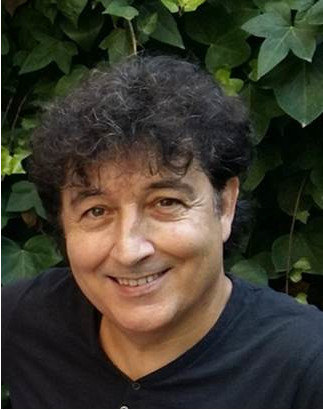
Javier Herguido is Professor of Chemical Engineering (Catedrático de Universidad) at the School of Engineering and Architecture (EINA) of the University of Zaragoza (Unizar), since 2007. He holds a B.Sc. and M.Sc. in industrial chemistry (1987) and a PhD in Science – Chemical Engineering program (1991). In 1993 holder of the chair ‘Chaire Hélioparc’ at the Technology Center ‘Hélioparc Pau-Pyrénées’ (France). Guest professor at several research centers and universities: ‘Laboratoire de Physico-Chimie Moléculaire’ CNRS-France, PUCP University-Peru, National University of Cuenca-Ecuador.
Currently, he is the Head (Director) of the Department of Chemical Engineering and Environmental Technologies – Unizar, and the Secretary of the Spanish Catalysis Society (SECAT).
In his research activity, he is a member of the Catalysis and Reactor Engineering Group (CREG) and the Aragon Institute of Engineering Research (I3A). His current research activity is focused in the area of Chemical Reactor Engineering including:
a) Fluidized bed reactors with oxidizing and reducing zones for selective oxidation processes and for catalytic dehydrogenations.
b) Hydrogen technologies: his current research efforts are devoted to fields related with hydrogen production and/or purification from several sources, hydrogen utilization in Power to Gas processes such as CO2 methanation, and Power to Liquid processes such as methanol production.
c) Processes intensification, including the use of membrane reactors.
He has participated in 43 research projects, largely as main researcher. His scientific production includes: 120 papers (counting 2 reviews per invitation) in JCR-indexed journals such as AIChEJ, Appl. Catal., Cat. Today, CEJ., CES, IECR, Int. J. Hydrogen Energy, J. Catal., J. Power Sources, Powder Tech., Studies Surf. Sci. Catal., among others; over 370 presentations at scientific meetings; 2 patents; and the book “Chemical Reaction Engineering” (1999, Ed. Síntesis, Madrid). He has supervised 14 PhD thesis. H Index: 35 (G-Scholar, 3762 citations), 30 (Scopus, 2760 citations) -October 2023-
Orcid: https://orcid.org/0000-0003-1940-9597
Scopus: https://www.scopus.com/authid/detail.uri?authorId=57195414034
PUBLICATIONS
2026
Mercader, V. D.; Sanz-Monreal, P.; Durán, P.; Aragüés-Aldea, P.; Francés, E.; Herguido, J.; Peña, J. A.
Intensifying synthetic natural gas production by functionalization of a NiFe/γ-Al2O3 catalyst with alkaline and alkaline-earth materials Journal Article
En: Fuel, vol. 406, pp. 136698, 2026, ISSN: 0016-2361.
@article{MERCADER2026136698,
title = {Intensifying synthetic natural gas production by functionalization of a NiFe/γ-Al2O3 catalyst with alkaline and alkaline-earth materials},
author = {V. D. Mercader and P. Sanz-Monreal and P. Durán and P. Aragüés-Aldea and E. Francés and J. Herguido and J. A. Peña},
url = {https://www.sciencedirect.com/science/article/pii/S0016236125024238},
doi = {https://doi.org/10.1016/j.fuel.2025.136698},
issn = {0016-2361},
year = {2026},
date = {2026-01-01},
journal = {Fuel},
volume = {406},
pages = {136698},
abstract = {This study demonstrates the influence of the functionalization method (Mechanical Mixture -MM- and Dual Function Materials -DFM-) of two CO2 adsorbent species (Na and Ca) in a catalytic fixed-bed reactor for CO2 methanation. The experiments consisted of cycles beginning with a CO2 adsorption stage followed by a methanation stage (with H2), interspersed with or without inert purge periods. The greatest enhancement in methane generation was observed in experiments with a mechanical mixture (MM) of NiFe/γ-Al2O3 catalyst and Na2O/γ-Al2O3. The methane production capacity was tested over a temperature range comprised between 200 and 400 °C, with values over 380 μmol/g obtained under moderate conditions (350 °C and pCO2 = 0.12 bar) and selectivity to methane close to 100 %. Since the ultimate goal is the methanation of the CO2 present in a biogas (without removing CH4), the potential effect of the presence of methane during the CO2 adsorption stages was also investigated. To achieve this task, a feed stream representative of a sweetened biogas coming from the anaerobic decomposition of municipal solid waste (MSW) (70 %v CH4 and 30 %v CO2) was used. The results showed no adverse effects along the successive cycles, paving the way to the use of these solids for biogas upgrading. On the other hand, the catalyst did not show a significant loss of activity after several hours of repetitive adsorption-methanation cycles.},
keywords = {},
pubstate = {published},
tppubtype = {article}
}
González-Pizarro, R.; Calero-Berrocal, R.; Lasobras, J.; Renda, S.; Rodríguez-Pardo, M. R.; Soler, J.; Menéndez, M.; Herguido, J.
Tuning e-fuel selectivity in sorption-enhanced CO2 hydrogenation over In2O3/ZrO2: The effect of LTA and FAU zeolites Journal Article
En: Fuel, vol. 406, pp. 136974, 2026, ISSN: 0016-2361.
@article{GONZALEZPIZARRO2026136974,
title = {Tuning e-fuel selectivity in sorption-enhanced CO2 hydrogenation over In2O3/ZrO2: The effect of LTA and FAU zeolites},
author = {R. González-Pizarro and R. Calero-Berrocal and J. Lasobras and S. Renda and M. R. Rodríguez-Pardo and J. Soler and M. Menéndez and J. Herguido},
url = {https://www.sciencedirect.com/science/article/pii/S0016236125026997},
doi = {https://doi.org/10.1016/j.fuel.2025.136974},
issn = {0016-2361},
year = {2026},
date = {2026-01-01},
journal = {Fuel},
volume = {406},
pages = {136974},
abstract = {The e-fuels synthesis via CO2 hydrogenation and the Sorption Enhanced Reaction technology are captivating strategies for CO2 utilization and the integration of renewable energy sources. This study focuses on enhancing the conversion of CO2 over an In2O3/ZrO2 catalyst by incorporating LTA zeolites (3A and 4A) and a FAU zeolite (13X). Key operational parameters, such as temperature (T), Gas Hour Space Velocity (GHSV), type of zeolite, and Zeolite: Catalyst mass ratio (Z/C), were systematically varied. LTA zeolites (3A and 4A) provided the highest CO2 conversions. The introduction of a water-adsorbing solid into the reactor significantly altered the products yield and selectivity. While the selectivity towards CH4, CH3OH, and C2H6O appeared to lay on the type of zeolite, the selectivity towards CO remained unaffected. Zeolite 3A demonstrated the greatest enhancement in selectivity towards CH4 and CH3OH, whereas the synthesis of C2H6O was favored by zeolites 4A and 13X. The Zeolite:Catalyst mass ratio also played a crucial role in process performance, influencing both CO2 conversion and product selectivity. Increasing this ratio improved CO2 conversion and reduced CO selectivity under all operating conditions, while CH4 selectivity increased. However, the selectivity toward CH3OH and C2H6O exhibited an anomalous and complementary behavior. While a maximum was observed for DME, a minimum was registered in methanol production, suggesting a dependency of the dehydration reaction kinetics on the amount of water produced during the reaction.},
keywords = {},
pubstate = {published},
tppubtype = {article}
}
González-Pizarro, R.; Renda, S.; Lasobras, J.; Soler, J.; Menéndez, M.; Herguido, J.
Low loading copper-based catalysts for effective CO2 hydrogenation to methanol Journal Article
En: Fuel, vol. 408, pp. 137642, 2026, ISSN: 0016-2361.
@article{GONZALEZPIZARRO2026137642,
title = {Low loading copper-based catalysts for effective CO2 hydrogenation to methanol},
author = {R. González-Pizarro and S. Renda and J. Lasobras and J. Soler and M. Menéndez and J. Herguido},
url = {https://www.sciencedirect.com/science/article/pii/S001623612503368X},
doi = {https://doi.org/10.1016/j.fuel.2025.137642},
issn = {0016-2361},
year = {2026},
date = {2026-01-01},
journal = {Fuel},
volume = {408},
pages = {137642},
abstract = {Methanol synthesis via CO2 hydrogenation is an emerging Power-to-Liquid (PtL) technology aimed to accelerate the energy transition and the defossilization of key sectors, particularly maritime transport. This study focuses on the study of low loading formulations, to minimize the catalyst cost. Key operational variables including temperature (T), Weight Hourly Space Velocity (WHSV), copper and zinc loadings, and aging state were systematically varied. An overall active phase loading of 10 %wt emerged as optimal. Within this total loading, a 5 %wtCu-5 %wtZn/ZrO2 catalysts delivered higher methanol productivity than 10 %wtCu/ZrO2; however, the bimetallic catalysts showed pronounced deactivation under water-rich atmospheres, establishing 10 %wtCu/ZrO2 as the most promising catalysts. Operating temperature and WHSV exerted a strong, synergistic influence on CH3OH formation; in particular, increasing WHSV shifted the reaction away from thermodynamic control and boosted methanol synthesis. Finally, the catalytic performance of these low-loading catalysts was benchmarked against high-copper-loading methanol catalysts reported in the literature by critically compare their activities as a function of the residence time (τ) calculated at reaction conditions. This assessment revealed that the proposed formulation is highly competitive when compared to most conventional formulation, with a maximum methanol space time yield (STYCH3OH) of 3.9 gCH3OH gCu-1 h-1. This comparison confirms that the catalysts proposed in this study could offer a remarkably more efficient use of the active phase than the conventional high-copper-loading catalysts.},
keywords = {},
pubstate = {published},
tppubtype = {article}
}
González-Pizarro, R.; Lasobras, J.; Renda, S.; Soler, J.; Menéndez, M.; Herguido, J.
En: Separation and Purification Technology, vol. 404, pp. 138902, 2026, ISSN: 1383-5866.
@article{GONZALEZPIZARRO2026138902,
title = {Overcoming thermodynamic limitations of the low-temperature reverse water-gas shift in a sorption-enhanced fluidized bed reactor with continuous sorbent feeding and separation (SEFBR + CSF)},
author = {R. González-Pizarro and J. Lasobras and S. Renda and J. Soler and M. Menéndez and J. Herguido},
url = {https://www.sciencedirect.com/science/article/pii/S1383586626021684},
doi = {https://doi.org/10.1016/j.seppur.2026.138902},
issn = {1383-5866},
year = {2026},
date = {2026-01-01},
journal = {Separation and Purification Technology},
volume = {404},
pages = {138902},
abstract = {Abstract
This work presents a novel approach for intensifying the reverse water gas shift (rWGS) reaction by integrating an advanced fluidized-bed reactor design with a continuous solid sorbent feeding/separation strategy. The proposed Sorption Enhanced Fluidized Bed Reactor combined with Continuous Sorbent Feeding and Separation (SEFBR + CSF) enables continuous operation while maintaining the intensification effect traditionally associated with temporal-limited sorption-enhanced processes. This configuration externalizes the regeneration of the water-adsorbing zeolite, which is continuously and selectively withdrawn from the reactor in a partially or fully saturated state and replaced with regenerated material, thereby sustaining the sorption capacity throughout operation. Process intensification was experimentally demonstrated in the SEFBR + CSF configuration, which achieved CO yields significantly higher than those obtained in the conventional fluidized-bed reactor (cFBR). During the interval in which continuous sorbent feeding was applied, CO production surpassed the thermodynamic equilibrium limit at operating temperatures between 260 and 300 °C. When compared with literature data under similar conditions, the proposed system exhibited superior CO yields, particularly in the low-temperature regime where conventional LT-rWGS performance is typically limited. Overall, the SEFBR + CSF system represents a promising pathway for continuous sorption-enhanced operation, providing improved efficiency and enabling the process to exceed the equilibrium constraints of the LT-rWGS reaction.},
keywords = {},
pubstate = {published},
tppubtype = {article}
}
This work presents a novel approach for intensifying the reverse water gas shift (rWGS) reaction by integrating an advanced fluidized-bed reactor design with a continuous solid sorbent feeding/separation strategy. The proposed Sorption Enhanced Fluidized Bed Reactor combined with Continuous Sorbent Feeding and Separation (SEFBR + CSF) enables continuous operation while maintaining the intensification effect traditionally associated with temporal-limited sorption-enhanced processes. This configuration externalizes the regeneration of the water-adsorbing zeolite, which is continuously and selectively withdrawn from the reactor in a partially or fully saturated state and replaced with regenerated material, thereby sustaining the sorption capacity throughout operation. Process intensification was experimentally demonstrated in the SEFBR + CSF configuration, which achieved CO yields significantly higher than those obtained in the conventional fluidized-bed reactor (cFBR). During the interval in which continuous sorbent feeding was applied, CO production surpassed the thermodynamic equilibrium limit at operating temperatures between 260 and 300 °C. When compared with literature data under similar conditions, the proposed system exhibited superior CO yields, particularly in the low-temperature regime where conventional LT-rWGS performance is typically limited. Overall, the SEFBR + CSF system represents a promising pathway for continuous sorption-enhanced operation, providing improved efficiency and enabling the process to exceed the equilibrium constraints of the LT-rWGS reaction.
Aragüés-Aldea, P.; Durán, P.; Mercader, V. D.; Renda, S.; Francés, E.; Peña, J. A.; Herguido, J.
Packed-bed membrane reactors as a strategy for selective CO2 methanation Journal Article
En: Catalysis Today, vol. 476, pp. 115899, 2026, ISSN: 0920-5861.
@article{ARAGUESALDEA2026115899,
title = {Packed-bed membrane reactors as a strategy for selective CO2 methanation},
author = {P. Aragüés-Aldea and P. Durán and V. D. Mercader and S. Renda and E. Francés and J. A. Peña and J. Herguido},
url = {https://www.sciencedirect.com/science/article/pii/S0920586126002233},
doi = {https://doi.org/10.1016/j.cattod.2026.115899},
issn = {0920-5861},
year = {2026},
date = {2026-01-01},
journal = {Catalysis Today},
volume = {476},
pages = {115899},
abstract = {CO2 methanation represents a key route within Power-to-X strategies for converting captured carbon into synthetic natural gas. However, its efficiency is limited by thermodynamic constraints, heat management issues, and undesired CO formation due to the reverse water–gas shift reaction. In this work, a novel packed-bed membrane reactor (PBMR), conceived as an evolution of the polytropic packed-bed reactor (PPBR), is proposed and experimentally validated for selective CO2 methanation. The reactor enables distributed reactant feeding through a porous membrane wall, allowing enhanced control over local reaction environments along the catalytic bed. A Ni–Fe/Al2O3 catalyst was employed and tested under various operating conditions, including different weight hourly space velocities (WHSV) and feeding configurations (conventional, co-current, and counter-current). The influence of distributing either H2 or CO2 was systematically investigated in terms of CO2 conversion, temperature profiles, and CO selectivity. While distributed configurations did not improve overall CO2 conversion compared to conventional operation, they significantly affected selectivity. In particular, CO2-distributed feeding consistently reduced CO selectivity under iso-conversion conditions, achieving up to a 40% decrease in the most favorable case. This significant reduction highlights the effectiveness of spatial reactant management in driving the reaction pathway toward methane. Overall, these results underline the critical role of reactor design in overcoming selectivity limitations and demonstrate the potential of membrane-assisted distributed feeding as a process intensification strategy for CO2 methanation.},
keywords = {},
pubstate = {published},
tppubtype = {article}
}