
Call: +34 976761152
Email: qtmiguel@unizar.es
Address: Office 5.1.05 c/Mariano Esquillor SN Edificio I+D+i, I3A, 50018, Zaragoza (Spain)
Sideral: See the profile (CV)
ABOUT ME
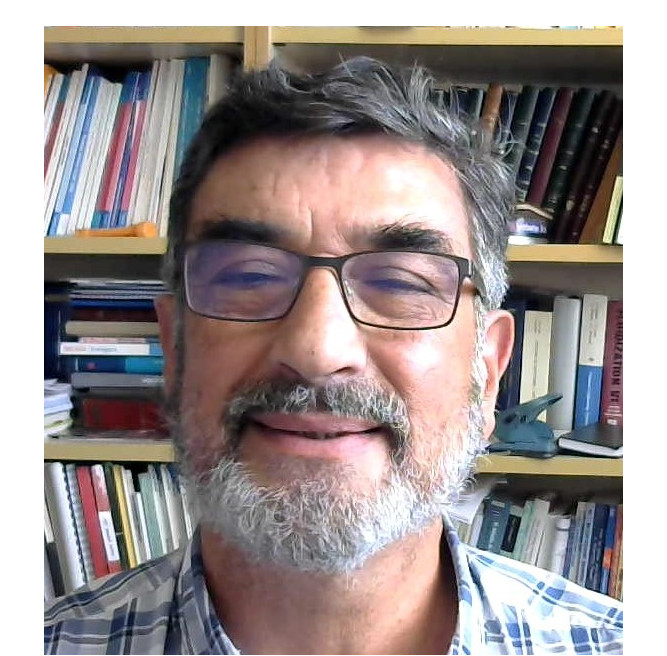
I have collaborated at the University of Zaragoza as Secretary and Director of the Department, Vice Dean and Director of the Secretariat of European Projects. I have served as an evaluator in various national and foreign agencies, in addition to being an associate editor of the Chemical Engineering Journal and a member of the PE8 (Product and Process Engineering) Panel of the ERC for Advanced Grants.
I am the co-author of 169 articles in peer-reviewed journals and 18 books or book chapters. H Index (WoK)= 38. Google Index: 48. Among my publications, membrane reactors and zeolite membranes (77 articles) and fluidized bed reactors (50 articles) have been the main themes.
Orcid: http://orcid.org/0000-0002-2494-102X
Scopus: https://www.scopus.com/authid/detail.uri?authorId=7102690468
PUBLICATIONS
2027
Zambrano-Juca, Daniel; Menéndez, Miguel
Proposal of a metric for catalyst comparison: Application to catalysts for methanol synthesis from CO2 Journal Article
En: Chemical Engineering Science, vol. 338, pp. 124691, 2027, ISSN: 0009-2509.
@article{ZAMBRANOJUCA2027124691,

title = {Proposal of a metric for catalyst comparison: Application to catalysts for methanol synthesis from CO2},

author = {Daniel Zambrano-Juca and Miguel Menéndez},

url = {https://www.sciencedirect.com/science/article/pii/S0009250926014065},

doi = {https://doi.org/10.1016/j.ces.2026.124691},

issn = {0009-2509},

year  = {2027},

date = {2027-01-01},

journal = {Chemical Engineering Science},

volume = {338},

pages = {124691},

abstract = {Comparing the performance of different catalysts becomes challenging when the experimental data have been obtained under varying experimental conditions (temperature, pressure, spatial velocity…). A system where a huge amount of experimental data has been published, but under widely different experimental conditions, is the catalytic hydrogenation of CO2 to methanol, which would be a key process for CO2 upgrading and for the production of sustainable fuels. This work introduces a new metric based on the calculation of the relative activity (a*) and relative selectivity (s*) with respect to a reference catalyst, using kinetics equations from literature and a plug flow reactor model. For this reaction an industrially relevant catalyst (Cu/ZnO/Al2O3) has been chosen as reference catalyst, a wide review of literature data was performed and, after applying a filter for thermodynamic feasibility, the values of relative activity (a*) and selectivity (s*) for each catalyst were calculated. Eleven groups of catalyst have been analyzed and compared using this methodology, and significative trends were found in this meta-analysis. Systems based on Cu (including promotors as Zr, Y, W or Al) show significative improvements in a* and/or s* over the reference catalyst. Ga-promoted catalysts, particularly the Cu-Ga systems, show more relative selectivity (s*> 3) than most of the studied catalyst. Systems based on In2O3, in particular with Pd doping (with s*>2 and good activity), ZnZrOx as catalyst and as support, and innovative solids such as CdZrOx (with a* > 70 and s* > 1.5), emerge as the most attractive platforms to achieve high intrinsic selectivity. The proposed methodology could be extended to other reaction systems of interest, providing a useful approach for screening the most suitable catalyst for a given reaction.},

keywords = {},

pubstate = {published},

tppubtype = {article}

}
2026
González Pizarro, Rodrigo; Renda, Simona; Lasobras Laguna, Javier; Soler Herrero, Jaime; Menéndez Sastre, Miguel; Herguido Huerta, Javier
Intensified Catalytic CO₂ Conversion into e-Fuels: A Study of Different Process Intensification Strategies Proceedings
vol. 14, 2026.
@proceedings{GonzálezPizarro_Renda_LasobrasLaguna_SolerHerrero_MenéndezSastre_HerguidoHuerta_2026,

title = {Intensified Catalytic CO₂ Conversion into e-Fuels: A Study of Different Process Intensification Strategies},

author = {González Pizarro, Rodrigo and Renda, Simona and Lasobras Laguna, Javier and Soler Herrero, Jaime and Menéndez Sastre, Miguel and Herguido Huerta, Javier},

url = {https://papiro.unizar.es/ojs/index.php/jji3a/article/view/13351},

doi = {10.26754/jji-i3a.202613351},

year  = {2026},

date = {2026-07-01},

urldate = {2026-07-01},

journal = {Jornada de Jóvenes Investigadores del I3A},

volume = {14},

keywords = {},

pubstate = {published},

tppubtype = {proceedings}

}
Flores Calvo, Diego; González Pizarro, Rodrigo; Soler Herrero, Jaime; Menéndez Sastre, Miguel; Renda, Simona; Lasobras Laguna, Javier; Herguido Huerta, Javier
vol. 14, 2026.
@proceedings{FloresCalvo_GonzálezPizarro_SolerHerrero_MenéndezSastre_Renda_LasobrasLaguna_HerguidoHuerta_2026,

title = {Optimización de las condiciones de operación para la síntesis de metanol vía hidrogenación catalítica de CO2 en reactor de lecho fijo},

author = {Flores Calvo, Diego and González Pizarro, Rodrigo and Soler Herrero, Jaime and Menéndez Sastre, Miguel and Renda, Simona and Lasobras Laguna, Javier and Herguido Huerta, Javier},

url = {https://papiro.unizar.es/ojs/index.php/jji3a/article/view/13387},

doi = {10.26754/jji-i3a.202613387},

year  = {2026},

date = {2026-07-01},

urldate = {2026-07-01},

journal = {Jornada de Jóvenes Investigadores del I3A},

volume = {14},

keywords = {},

pubstate = {published},

tppubtype = {proceedings}

}
González-Pizarro, R.; Calero-Berrocal, R.; Lasobras, J.; Renda, S.; Rodríguez-Pardo, M. R.; Soler, J.; Menéndez, M.; Herguido, J.
Tuning e-fuel selectivity in sorption-enhanced CO2 hydrogenation over In2O3/ZrO2: The effect of LTA and FAU zeolites Journal Article
En: Fuel, vol. 406, pp. 136974, 2026, ISSN: 0016-2361.
@article{GONZALEZPIZARRO2026136974,

title = {Tuning e-fuel selectivity in sorption-enhanced CO2 hydrogenation over In2O3/ZrO2: The effect of LTA and FAU zeolites},

author = {R. González-Pizarro and R. Calero-Berrocal and J. Lasobras and S. Renda and M. R. Rodríguez-Pardo and J. Soler and M. Menéndez and J. Herguido},

url = {https://www.sciencedirect.com/science/article/pii/S0016236125026997},

doi = {https://doi.org/10.1016/j.fuel.2025.136974},

issn = {0016-2361},

year  = {2026},

date = {2026-01-01},

journal = {Fuel},

volume = {406},

pages = {136974},

abstract = {The e-fuels synthesis via CO2 hydrogenation and the Sorption Enhanced Reaction technology are captivating strategies for CO2 utilization and the integration of renewable energy sources. This study focuses on enhancing the conversion of CO2 over an In2O3/ZrO2 catalyst by incorporating LTA zeolites (3A and 4A) and a FAU zeolite (13X). Key operational parameters, such as temperature (T), Gas Hour Space Velocity (GHSV), type of zeolite, and Zeolite: Catalyst mass ratio (Z/C), were systematically varied. LTA zeolites (3A and 4A) provided the highest CO2 conversions. The introduction of a water-adsorbing solid into the reactor significantly altered the products yield and selectivity. While the selectivity towards CH4, CH3OH, and C2H6O appeared to lay on the type of zeolite, the selectivity towards CO remained unaffected. Zeolite 3A demonstrated the greatest enhancement in selectivity towards CH4 and CH3OH, whereas the synthesis of C2H6O was favored by zeolites 4A and 13X. The Zeolite:Catalyst mass ratio also played a crucial role in process performance, influencing both CO2 conversion and product selectivity. Increasing this ratio improved CO2 conversion and reduced CO selectivity under all operating conditions, while CH4 selectivity increased. However, the selectivity toward CH3OH and C2H6O exhibited an anomalous and complementary behavior. While a maximum was observed for DME, a minimum was registered in methanol production, suggesting a dependency of the dehydration reaction kinetics on the amount of water produced during the reaction.},

keywords = {},

pubstate = {published},

tppubtype = {article}

}
González-Pizarro, R.; Renda, S.; Lasobras, J.; Soler, J.; Menéndez, M.; Herguido, J.
Low loading copper-based catalysts for effective CO2 hydrogenation to methanol Journal Article
En: Fuel, vol. 408, pp. 137642, 2026, ISSN: 0016-2361.
@article{GONZALEZPIZARRO2026137642,

title = {Low loading copper-based catalysts for effective CO2 hydrogenation to methanol},

author = {R. González-Pizarro and S. Renda and J. Lasobras and J. Soler and M. Menéndez and J. Herguido},

url = {https://www.sciencedirect.com/science/article/pii/S001623612503368X},

doi = {https://doi.org/10.1016/j.fuel.2025.137642},

issn = {0016-2361},

year  = {2026},

date = {2026-01-01},

journal = {Fuel},

volume = {408},

pages = {137642},

abstract = {Methanol synthesis via CO2 hydrogenation is an emerging Power-to-Liquid (PtL) technology aimed to accelerate the energy transition and the defossilization of key sectors, particularly maritime transport. This study focuses on the study of low loading formulations, to minimize the catalyst cost. Key operational variables including temperature (T), Weight Hourly Space Velocity (WHSV), copper and zinc loadings, and aging state were systematically varied. An overall active phase loading of 10 %wt emerged as optimal. Within this total loading, a 5 %wtCu-5 %wtZn/ZrO2 catalysts delivered higher methanol productivity than 10 %wtCu/ZrO2; however, the bimetallic catalysts showed pronounced deactivation under water-rich atmospheres, establishing 10 %wtCu/ZrO2 as the most promising catalysts. Operating temperature and WHSV exerted a strong, synergistic influence on CH3OH formation; in particular, increasing WHSV shifted the reaction away from thermodynamic control and boosted methanol synthesis. Finally, the catalytic performance of these low-loading catalysts was benchmarked against high-copper-loading methanol catalysts reported in the literature by critically compare their activities as a function of the residence time (τ) calculated at reaction conditions. This assessment revealed that the proposed formulation is highly competitive when compared to most conventional formulation, with a maximum methanol space time yield (STYCH3OH) of 3.9 gCH3OH gCu-1 h-1. This comparison confirms that the catalysts proposed in this study could offer a remarkably more efficient use of the active phase than the conventional high-copper-loading catalysts.},

keywords = {},

pubstate = {published},

tppubtype = {article}

}